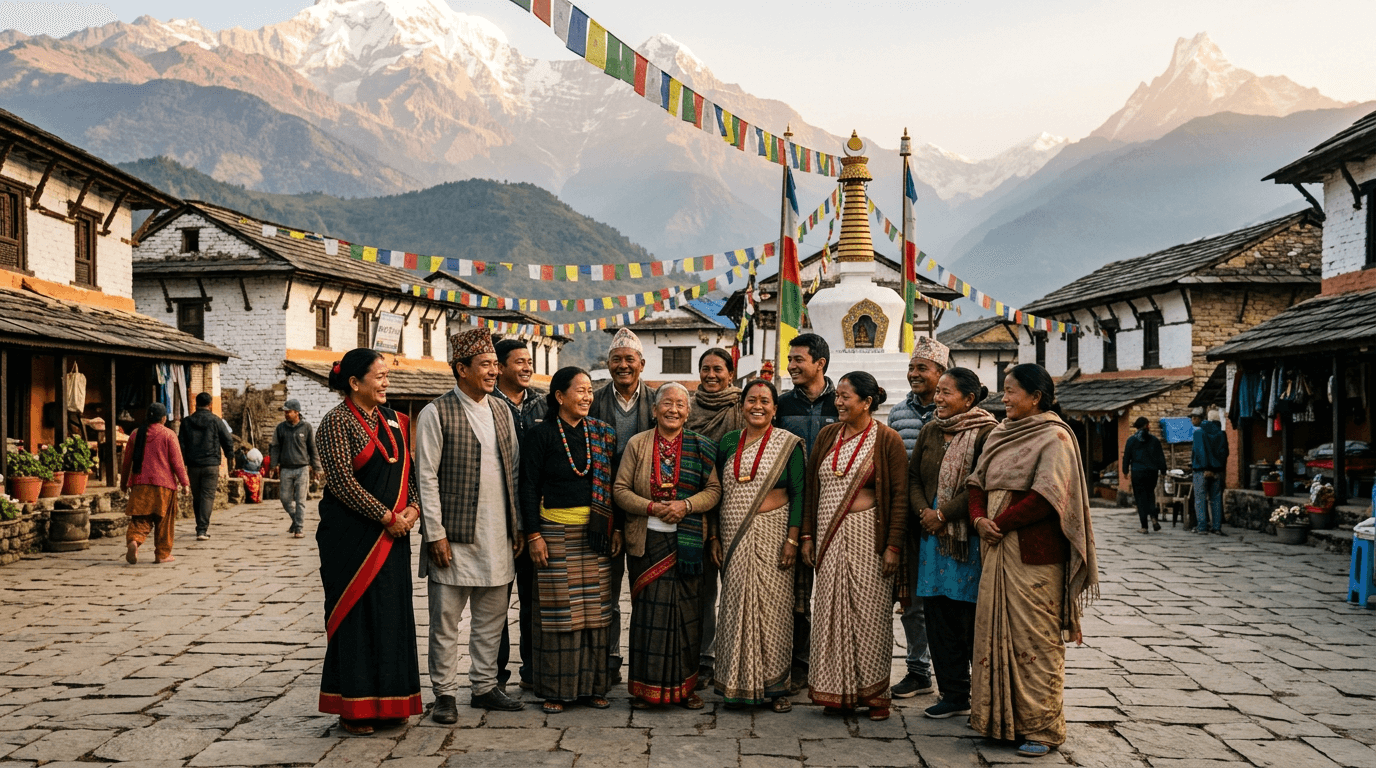
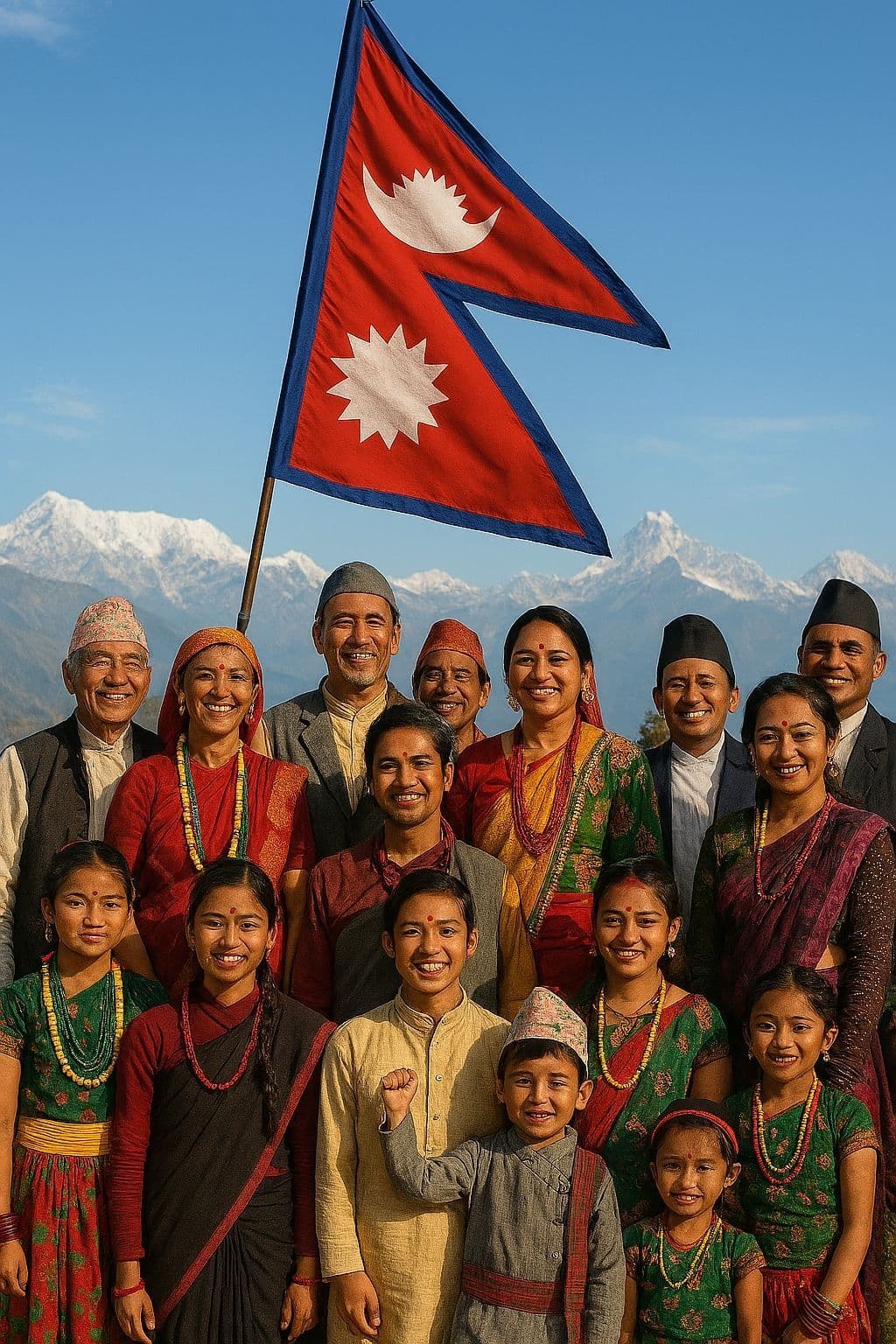
Walk one ridge in Nepal and you might hear three languages before lunch. The country is a meeting ground of peoples and histories — Himalayan, hill, and Terai — and that diversity is not background noise; it is how millions of people know who they are.
Government and scholarly inventories alike describe well over a hundred ethnic communities and more than a hundred twenty mother tongues. Nepali knits the republic together in schools and offices, yet Maithili, Bhojpuri, Tamang, Newar, Tharu, and dozens of other languages still carry songs, jokes, and arguments at home. Linguists group most of these under broad families — chiefly Indo-Aryan along the southern plains and mid-hills, and Tibeto-Burman across the high valleys — but daily life is messier and more interesting than any chart.
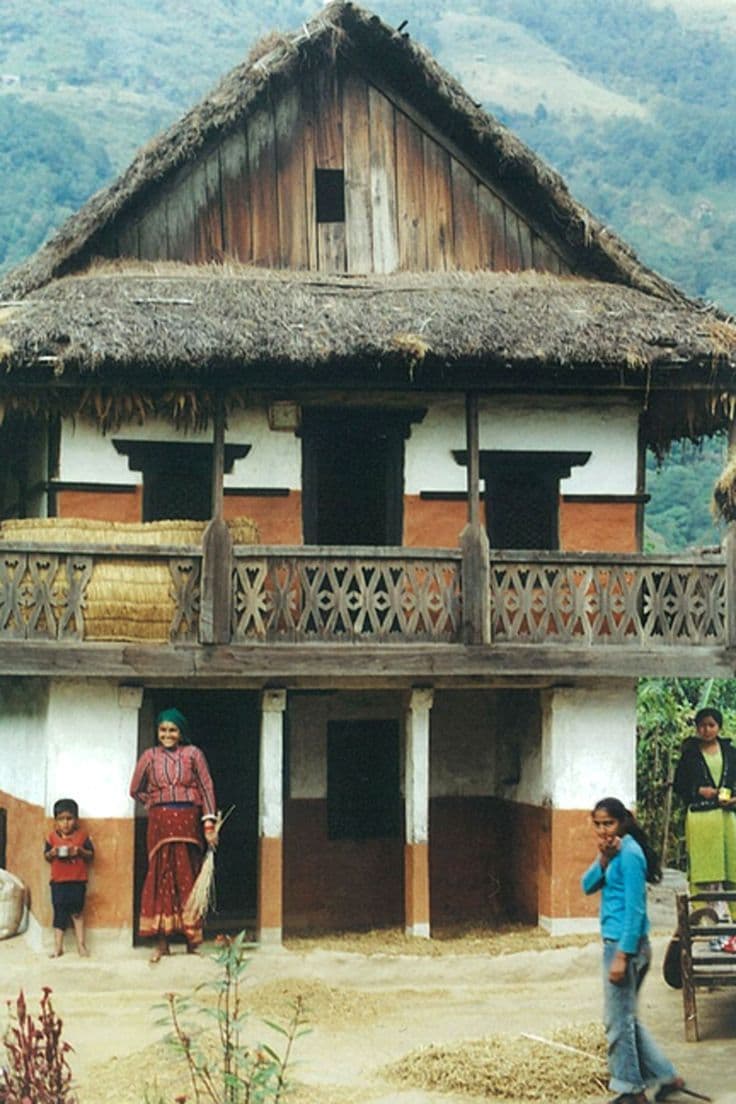
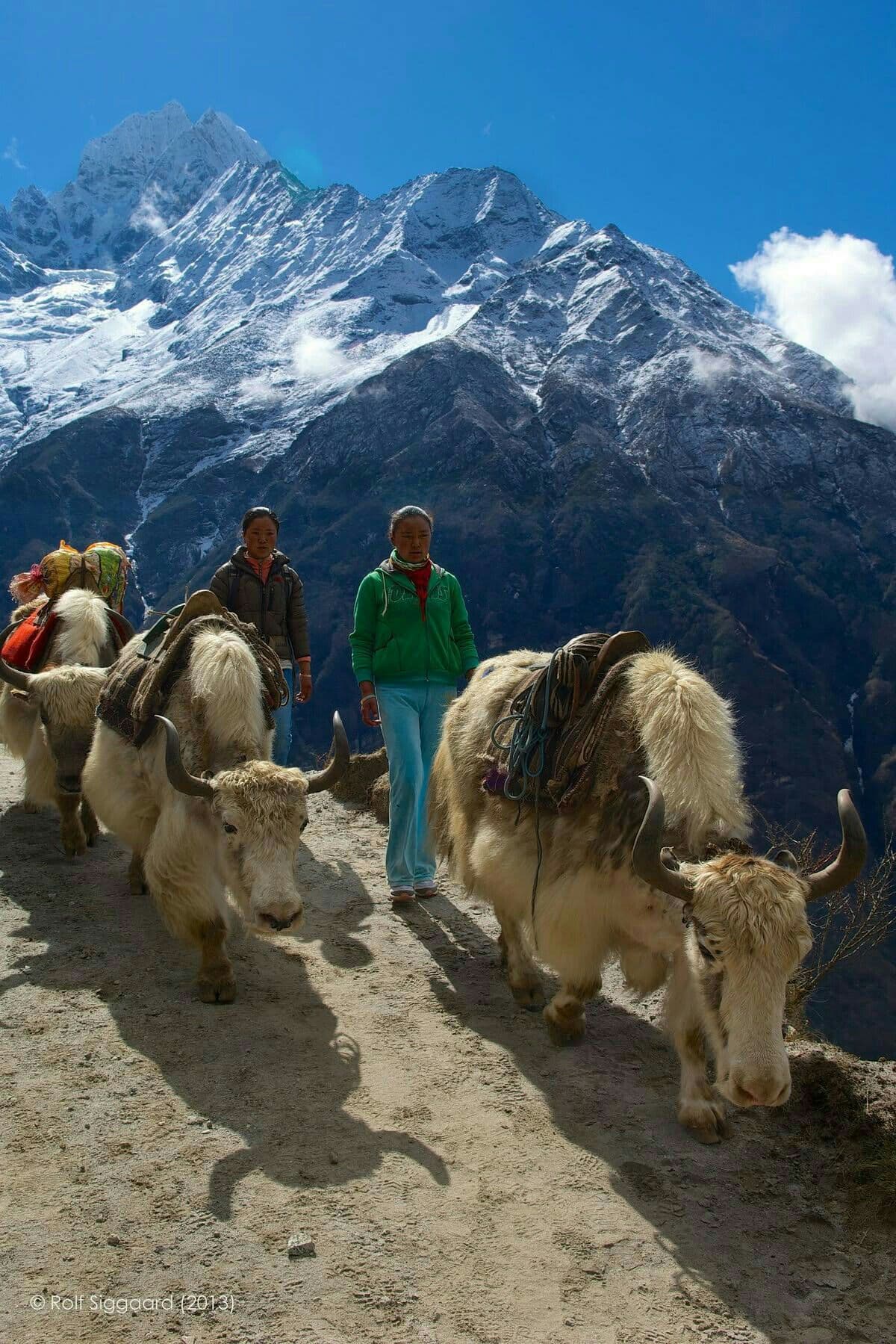
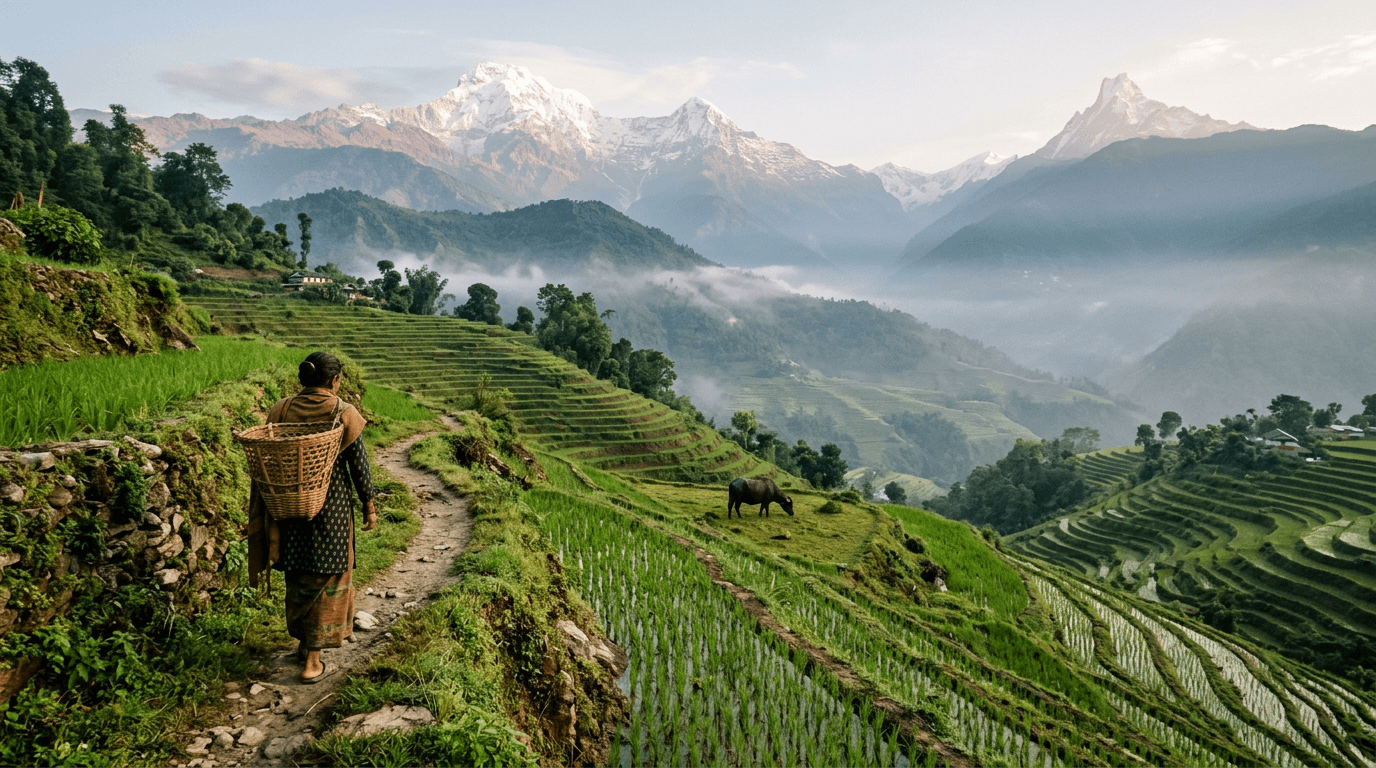
Terrain reinforces difference. The high Himalayas have long favored mobile trade, herding, and monastery life; the middle hills dense terracing, bazaars, and towns carved in wood; the Terai wide fields, border commerce, and cities that breathe heat and speed. People move for work, study, and marriage, so a Kathmandu ward or a Pokhara lane can hold accents from Solu, Doti, and Jhapa in a single afternoon.
Identity here is layered: citizenship, mother tongue, festival calendar, and the district someone names when asked “where is home?” SpotNepal treats that complexity as the real story — not a single postcard peak, but neighbors, cousins, and strangers who share a country without sharing one uniform script.
Historical & cultural context
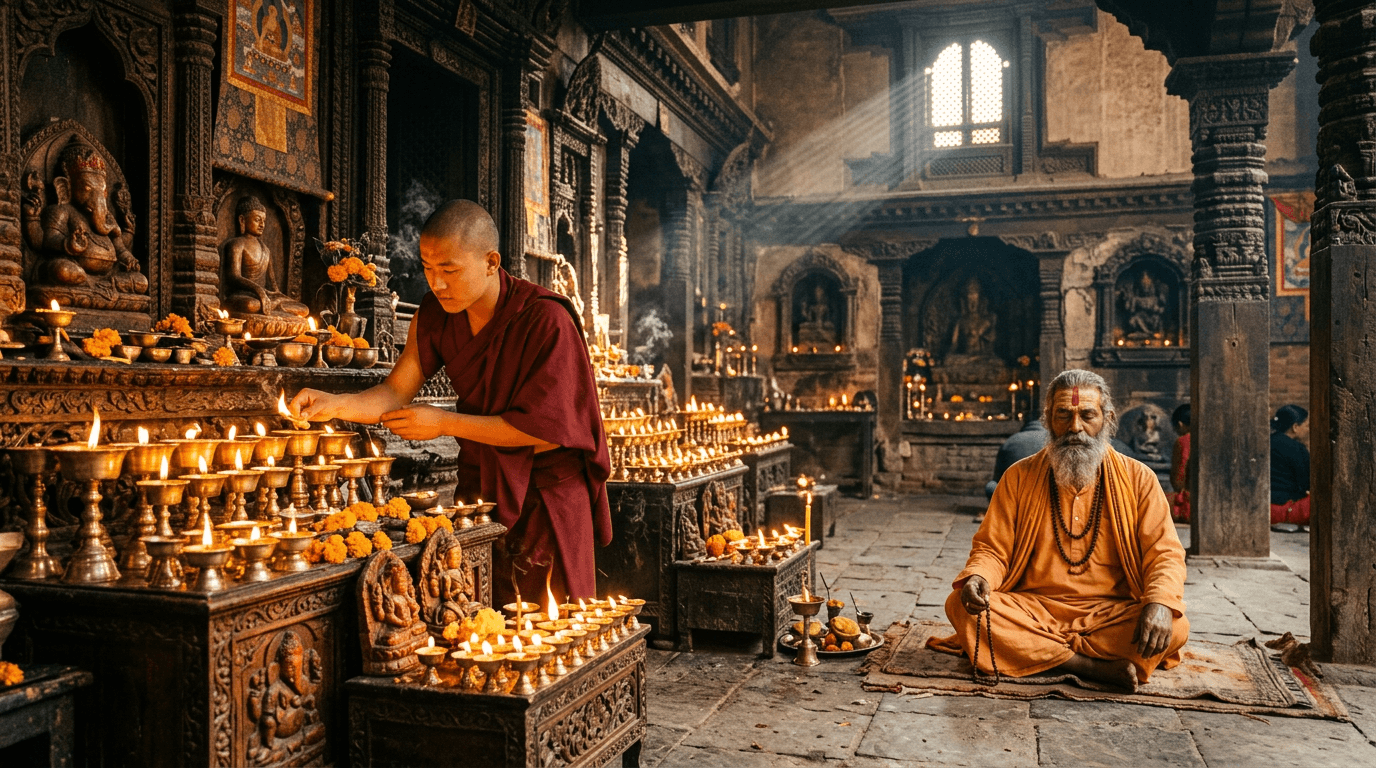
Modern Nepal inherited both a long history of small kingdoms and a deliberate project, after 1990 and again after 2006, to recognize marginalized languages and communities in law and education. Census categories and constitutional wording continue to evolve, echoing debates heard in the National Archives and in village meetings alike: who counts, who is heard, and how a diverse state stays fair. UNESCO-listed Kathmandu Valley heritage — living Newar towns — sits in the same nation as Tharu stick dances and Sherpa mountaineering culture; the tension between preservation and change is part of the contemporary story.
Every voice on this map adds a shade Nepal has always carried — many peoples, one shared ground.
Photo Gallery
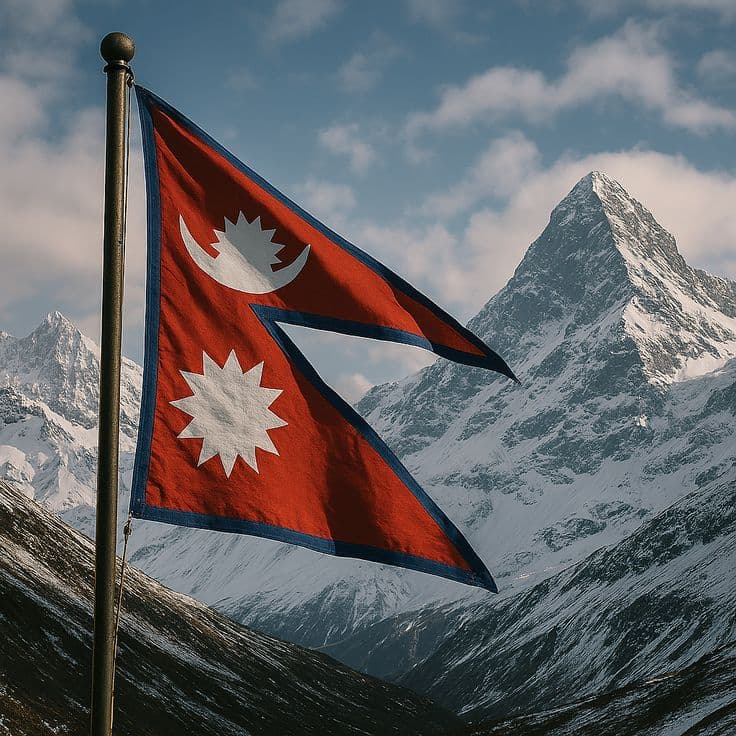
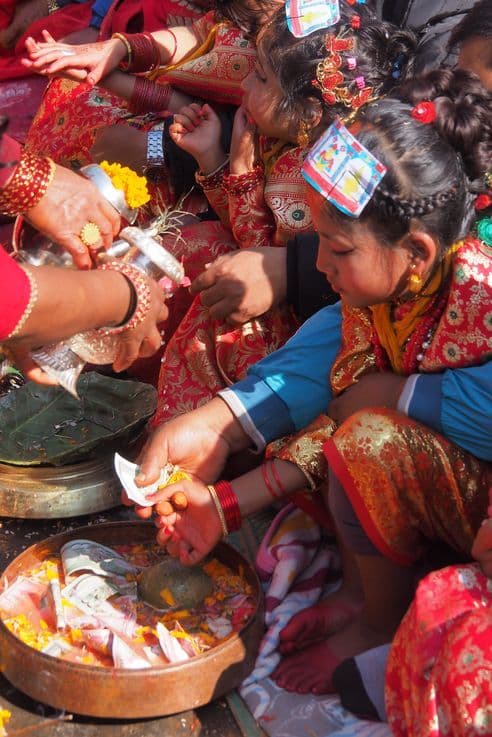
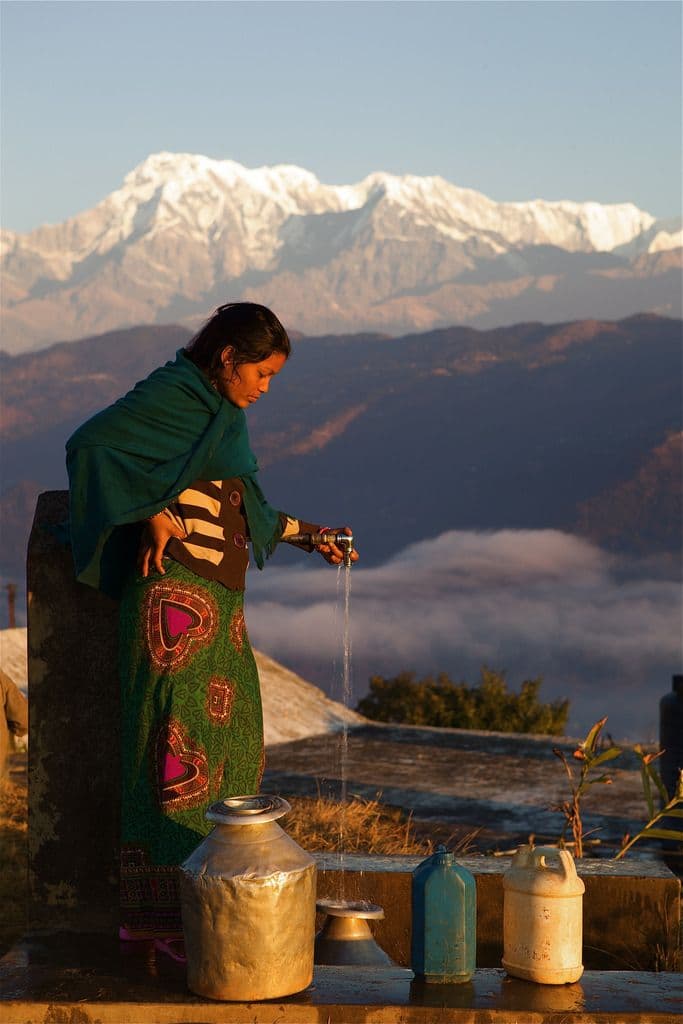
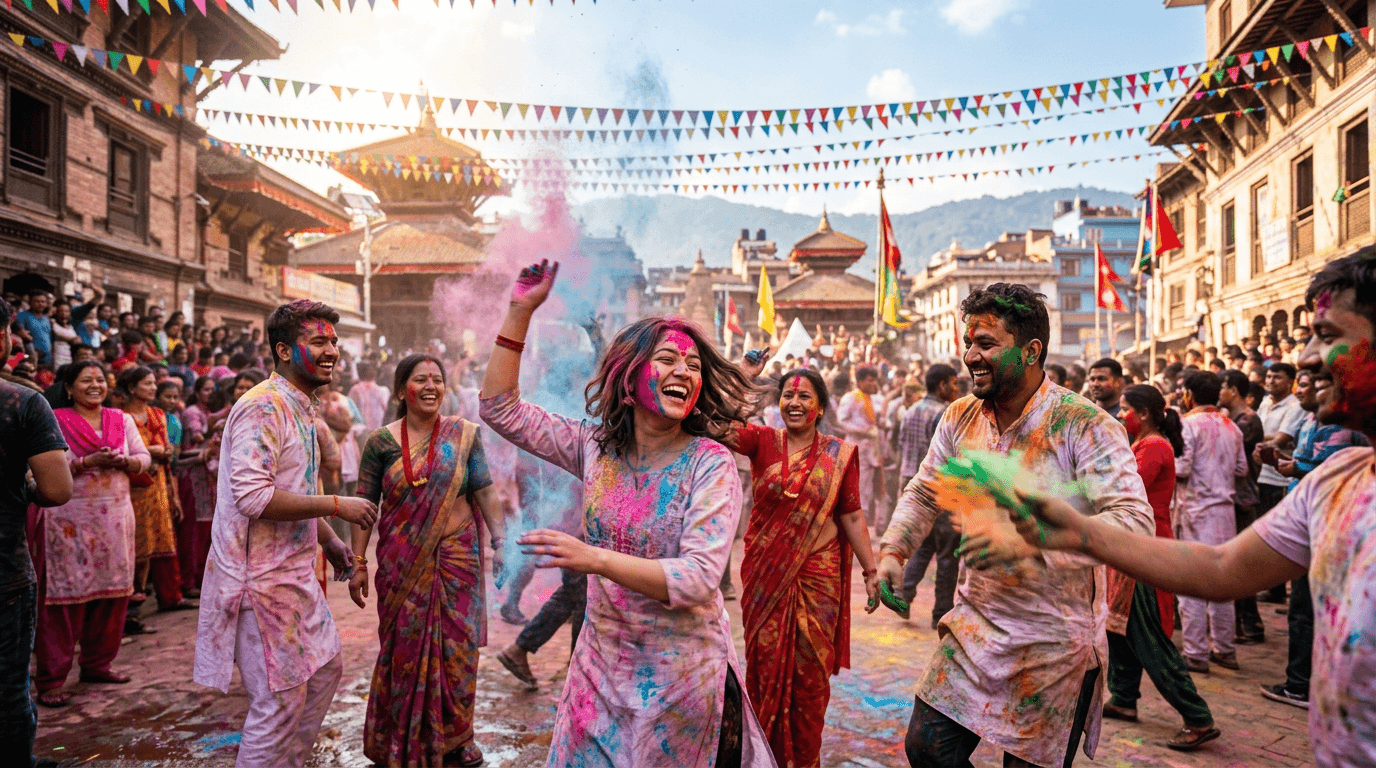
A visual sweep across gatherings, landscapes, and craft — the kinds of scenes where Nepal’s many cultures show up in daily life.
Places Where This Story Lives
These districts and cities anchor how diversity is lived — from ancient city squares to Terai plains and high passes.
Cultural Highlights
Quick reference points — Nepal’s depth is always larger than a headline.
100+
Ethnic communities
Distinct groups with their own languages, dress, and social customs across Nepal.
120+
Recorded mother tongues
National tallies and linguistic surveys together list well over a hundred twenty named languages in use.
3
Major belts
Himalaya, Pahad, and Terai — geography shapes dialect, diet, and rhythm of the year.
∞
Living traditions
Visible in food, music, festivals, architecture, and how neighbors greet one another.
More to read
Continue with related themes — each story is a doorway into a different side of Nepal.
SpotNepal
Keep exploring
Browse more stories, watch clips from across districts, or add your own perspective.